

Best Coffee Beans Online: 2026 Buyer's Guide
Table of Contents
- What Separates the Best Coffee Beans Online From Supermarket Bags
- Quick Comparison: Best Coffee Beans Online at a Glance
- 1. Ethiopia Natural: Best Single Origin Coffee Beans for Fruit-Forward Cups
- 2. 6 Bean Blend: The Best Coffee Beans for Espresso
- 3. Breakfast Blend: The Everyday Medium Roast That Never Disappoints
- 4. Colombia: Structured, Bright, and Built for Pour-Over
- 5. Cold Brew Coffee Beans: Low-Acid Beans for the Long Steep
- 6. Single Origin Favorites Sample Pack: The Lowest-Risk Way to Start
- How to Choose Coffee Beans Without Guessing
- Frequently Asked Questions
Last Updated: October 19, 2026
What Separates the Best Coffee Beans Online From Supermarket Bags
The bag on a supermarket shelf has usually been roasted months ago, and that single fact explains most of the gap. Coffee is a perishable agricultural product.
At Bearista Brews, we built our whole operation around that idea: small-batch roasting, individual orders, and shipping within 2-3 days of roast.
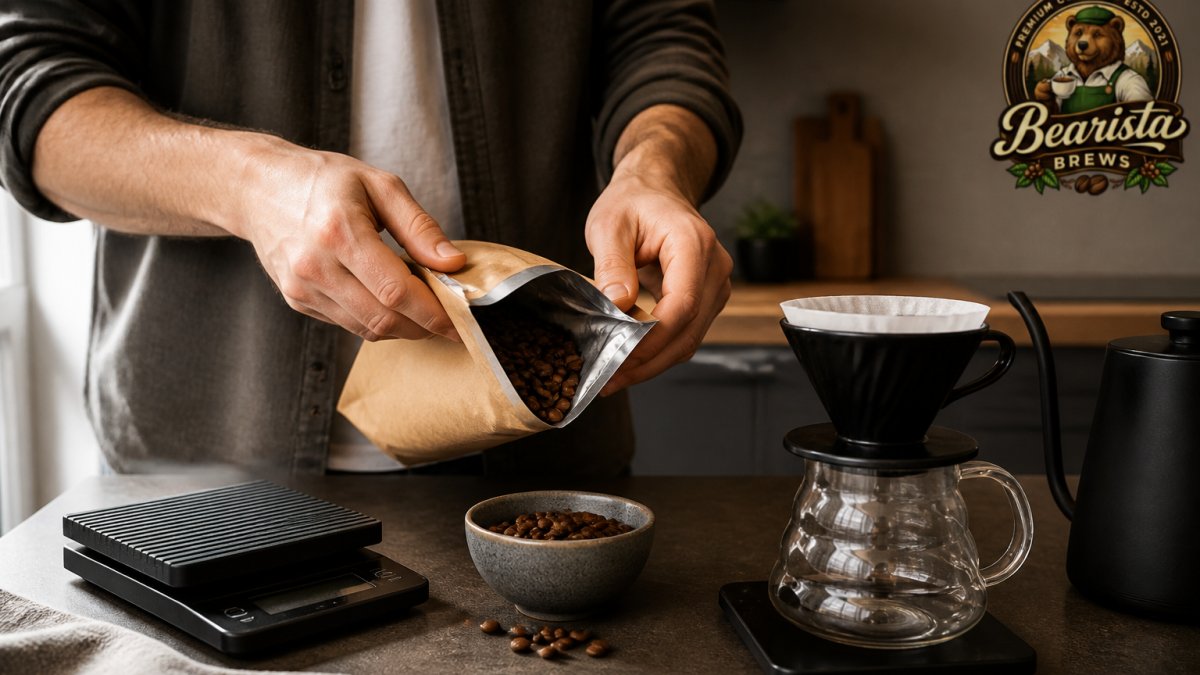
Three things separate a great online roaster from a mediocre one:
- A visible roast date, not just a "best by" stamp
- Whole bean coffee shipped intact so you grind fresh
- Traceable origin, with altitude and processing named
Quick Comparison: Best Coffee Beans Online at a Glance
Here's the short version, so you can scan before you read. Most comparison tables stop at roast level and price. This one adds the two things that actually determine whether online beans arrive fresh and whether the price is real: roast-date visibility and total delivered cost.
| Bean | Roast Level | Best For | Flavor Direction | Price | Roast-Date Visibility |
|---|---|---|---|---|---|
| Ethiopia Natural | Medium-light | Fruit-forward filter | Milk chocolate, fruity, caramel | $23.99 | Printed on bag |
| 6 Bean Blend | Dark | Espresso | Rich, bold, consistent | $23.99 | Printed on bag |
| Breakfast Blend | Medium | Everyday drip and pour-over | Hazelnut, citrus zest, caramel | $23.99 | Printed on bag |
| Colombia | Medium | Pour-over | Dried orange, berry, chocolate | $23.99 | Printed on bag |
| Cold Brew Coffee Beans | Dark | Cold brew | Deep chocolate, low acid | $23.99 | Printed on bag |
| Single Origin Favorites Sample Pack | Medium-light to medium-dark | Trying before committing | Six origins, six profiles | $24.99 | Printed on bag |
How to read this table
The price column is the sticker price, not the delivered cost. To compare fairly, divide the bag price by the cups it yields at your dose, then add shipping if you fall below the free-shipping threshold.

Roast-date visibility matters because it's the one freshness signal you can verify before buying. A printed roast date lets you confirm the beans were roasted days, not months, before they shipped.
What this table doesn't tell you
- Shipping speed and thresholds: confirm the free-shipping minimum and the typical transit time. Fast roast-to-ship matters more than a fast carrier if the bag sat on a shelf first.
- Subscription terms: recurring discounts are common, but check the delivery frequency and whether you can pause or cancel online.
- Decaf and lower-caffeine options: if you're cutting caffeine, ask which decaffeination method is used, Swiss Water and CO2 processes are the common ones, and expect slightly muted acidity compared with the regular version.
For the full breakdown of each bean, origin, processing, and brewing notes, read the sections below.
1. Ethiopia Natural: Best Single Origin Coffee Beans for Fruit-Forward Cups
If you want to understand why single origin coffee beans matter, start here. Grown at 1,700-1,900M in the Sidama Zone, these indigenous heirloom cultivars are full natural processed and dried on raised beds, which lets the cherry's fruit ferment around the bean.

What works: the layered sweetness holds up in a pour-over without turning sour. What doesn't: natural processing divides people. If you dislike berry-forward acidity, this is not your bag.
2. 6 Bean Blend: The Best Coffee Beans for Espresso
Espresso punishes weak beans. A blend of six origins, roasted dark, gives you the deep, complex base that holds up under pressure. This is the pick when you want consistency shot after shot rather than a flavor experiment.
The honest limitation: dark roast mutes origin character. You get chocolate and body, not terroir.
3. Breakfast Blend: The Everyday Medium Roast That Never Disappoints
Most mornings don't call for a project. This medium roast delivers toasted hazelnut, citrus zest, and light caramel with medium-bright acidity, and it works across drip, pour-over, AeroPress, and cold brew.
What most guides miss: a medium roast is the hardest to get right. Too light and it's thin, too dark and the brightness disappears. This one sits in the middle where it belongs.
4. Colombia: Structured, Bright, and Built for Pour-Over
From smallholder farms in Medellín, Antioquia, at 1,300-1,500M, this fully washed and solar-dried Colombia brings dried orange, berry, and chocolate in a clean, structured cup. Castillo, Caturra, and Typica varieties grown in volcanic loam give it the clarity that makes Colombian coffee a benchmark.

If you're coming from supermarket medium roasts, expect noticeably more acidity. That's the point.
5. Cold Brew Coffee Beans: Low-Acid Beans for the Long Steep
Cold extraction rewards the right bean and punishes the wrong one. These are Flame-Tuned specifically for low-acid, full-bodied richness that survives a 12-24 hour steep. Use a coarse grind at a 1:4 coffee-to-water ratio, steep cold, strain, and serve over ice.
Cold Brew Coffee Beans — Small-Batch, Flame-Tuned | Bearista Brews →
Available in 8oz, 12oz, and 1lb, so you're not committing to a bulk bag you'll never finish.
6. Single Origin Favorites Sample Pack: The Lowest-Risk Way to Start
Six 2oz packs, three continents, one box. Brazil Santos for smooth cocoa, Colombia for brightness, Costa Rica for honeyed sweetness, Ethiopia for fruit, Honduras for caramel and brown sugar, Tanzania for floral jasmine and strawberry.
How to Choose Coffee Beans Without Guessing
Most buying guides tell you to "match the bean to your brewer" and stop there. That's not a method, it's a slogan. Here is a repeatable way to choose, plus the two variables almost no one explains: how your equipment changes what "good" means, and what a bag actually costs per drinkable cup.
Start with your brewer, not the bag
Different brewers extract differently, and a bean that shines in one can taste hollow in another. Use this as your first filter:
- Espresso and moka pot: Choose a dark or medium-dark blend with enough body and low acidity to survive 9 bars of pressure. Single-origin light roasts often turn sharp or sour as espresso unless you have a capable grinder and can dial in finely. A six-origin dark blend is the forgiving default.
- Pour-over (V60, Chemex, Kalita): Medium and medium-light single origins reward the clarity and control of a pour-over. Expect brighter acidity and more distinct fruit or floral notes. If you're coming from supermarket medium roasts, the acidity will be noticeably higher, that's the style working as intended.
- French press: Medium and medium-dark roasts with good body work best; the metal mesh lets oils and fines through, so a bean with structure and sweetness holds up better than a delicate light roast.
- Automatic drip machine: A medium roast is the safest all-rounder. Machines vary widely in temperature stability, so a balanced medium roast hides inconsistency better than an extreme light or dark.
Then match your taste
Once the brewer narrows the field, pick by flavor direction:
- Fruity and bright: Natural-processed Ethiopian and other African single origins. Look for berry, citrus, and stone-fruit notes.
- Chocolatey and nutty: Medium and dark roasts from Brazil, Colombia, and blended origins. Look for cocoa, hazelnut, caramel, and brown sugar.
- Low-acidity: Dark roasts and cold-brew-specific beans, plus washed South American origins. If you're sensitive to acidity, avoid natural-process light roasts as your daily driver.
- Floral and tea-like: Light-roasted washed single origins from East Africa and Central America. These are the most rewarding and the least forgiving.
The part most guides skip: total delivered cost
Price per bag tells you almost nothing. What matters is price per good cup, and that depends on dose, shipping, and subscription terms.
A simple way to compare: divide the bag price by the number of cups it yields at your dose. A 12 oz bag at roughly 18 g per double shot yields about 18-19 espresso drinks; the same bag at 20 g per pour-over yields about 17 cups.
Before you check out, confirm four things:
- Shipping threshold, does the roaster ship free above a certain order size, and does that threshold push you to buy more than you'll drink before it stales?
- Subscription discount and frequency, most roasters discount recurring orders but lock in a delivery cadence. Match the cadence to your actual consumption, not the discount.
- Cancellation terms, can you pause or cancel online, or do you have to email support?
- Roast-date visibility at checkout, if the site won't show a roast date before you pay, treat the freshness claim as marketing.
The short version: choose by brewer, refine by taste, and compare by cost per cup rather than cost per bag. A bag that tastes flat is the expensive one no matter what the sticker says.
Frequently Asked Questions
What should I look for when buying coffee beans online?
Check three things before you buy: the roast date, not just a best-before date, because coffee peaks roughly 5 to 21 days after roasting; the origin and processing method, which tell you what flavor to expect; and the bag size against the price so you know your real cost per pound. A roaster that ships within 2 to 3 days of roasting, like Bearista Brews, gives you a much wider freshness window than a warehouse retailer. Also confirm whether the beans ship whole or pre-ground, since whole beans hold their aroma far longer.
Are freshly roasted coffee beans better?
Yes, within limits. Coffee releases most of its carbon dioxide in the first few days after roasting, so beans that sat for weeks taste flat and stale. Freshly roasted whole bean coffee delivers stronger aroma, clearer tasting notes, and more body. The sweet spot is usually 5 to 21 days post-roast. Bearista Brews roasts every order individually and ships within 2 to 3 days, so a bag arrives close to peak rather than past it. Grind just before brewing to keep those volatile compounds in the cup.
What are the best coffee beans for espresso?
Espresso rewards dark roast blends that hold structure under pressure. The 6 Bean Blend from Bearista Brews is built exactly for this: six origins, a dark roast profile, and rich, bold flavor that stays consistent shot after shot. Single origins can work for espresso too, but they tend to show more acidity and less forgiveness when your grind is slightly off. If you are dialing in a new machine, start with a dark roast blend, then experiment with single origin coffee beans once your grind and dose are repeatable.
How should I store coffee beans after ordering online?
Keep whole beans in an airtight, opaque container at room temperature, away from the stove, the fridge, and direct sun. Buy in a size you will finish in two to four weeks. Do not freeze and refreeze a bag, because condensation degrades the beans each time. If you order more than a month's supply, freeze a portion once in a sealed bag and thaw it fully before opening. Bearista Brews ships in 8oz, 12oz, and 1lb sizes, so you can match bag size to your actual weekly brewing volume.
Is a coffee bean subscription worth it for a single drinker?
It depends on your pace. A single daily drinker using roughly 18g per cup goes through about 500g every three to four weeks, which lines up with a 12oz bag. A subscription makes sense when it locks in a roast date and ships on a schedule you will actually finish, rather than leaving bags to go stale. Start with a one-time order to confirm you like the roast profile, then move to recurring delivery. Bearista Brews roasts to order, so each shipment arrives fresh rather than sitting in a warehouse.
Great coffee online comes down to three things: a real roast date, beans matched to your brewer, and a roaster who ships fast. Bearista Brews roasts every order individually using our Flame-Tuned process, sources specialty-grade beans from high-elevation estates, and ships within 2-3 days so peak aroma reaches your kitchen. Find your perfect roast and taste the difference freshness makes.