

How to Identify Over-Roasted Coffee Beans
Last Updated: October 23, 2026
Quick Summary
Over-roasted coffee beans display a uniform dark brown to nearly black color that looks charred and lifeless, with excessive surface oil that feels slick and leaves a visible oily residue on your finger. They smell acrid or ashy rather than pleasant, taste burnt and bitter, and have a charred or ashy gray interior when cracked open.
- Over-roasted beans are uniformly nearly black with no color variation, unlike dark roasts which keep brown tones and chocolate or cedar notes visible
- Run your finger across beans to test: over-roasted beans leave visible oily residue and feel slick, while properly dark-roasted beans feel slightly oily but not slick
- Over-roasted coffee smells acrid, ashy, or like burnt wood; quality dark roasts smell smoky but pleasant
- A controlled brew test using filtered water at 195-205°F, medium grind, and standard brew time can confirm if burnt taste comes from beans or brewing error
- Over-roasted beans taste burnt and bitter from day one, while stale beans taste flat and dull after four weeks; check the roast date to help distinguish between them
Table of Contents
- Visual Signs of Over-Roasted Coffee Beans
- Over-Roasted vs. Dark-Roasted Coffee: What's the Difference?
- Aroma and Smell: Reading What Your Beans Tell You
- Why Does Coffee Taste Burnt?
- Signs of a Bad Coffee Roast Beyond Darkness
- How to Store Coffee Beans for Freshness
- Your At-Home Inspection Checklist
- Brewing and Tasting Controls to Confirm Over-Roasting
- Frequently Asked Questions
Visual Signs of Over-Roasted Coffee Beans
The easiest way to spot over-roasted coffee beans is color: almost uniformly dark brown to black, charred rather than intentionally dark-roasted.
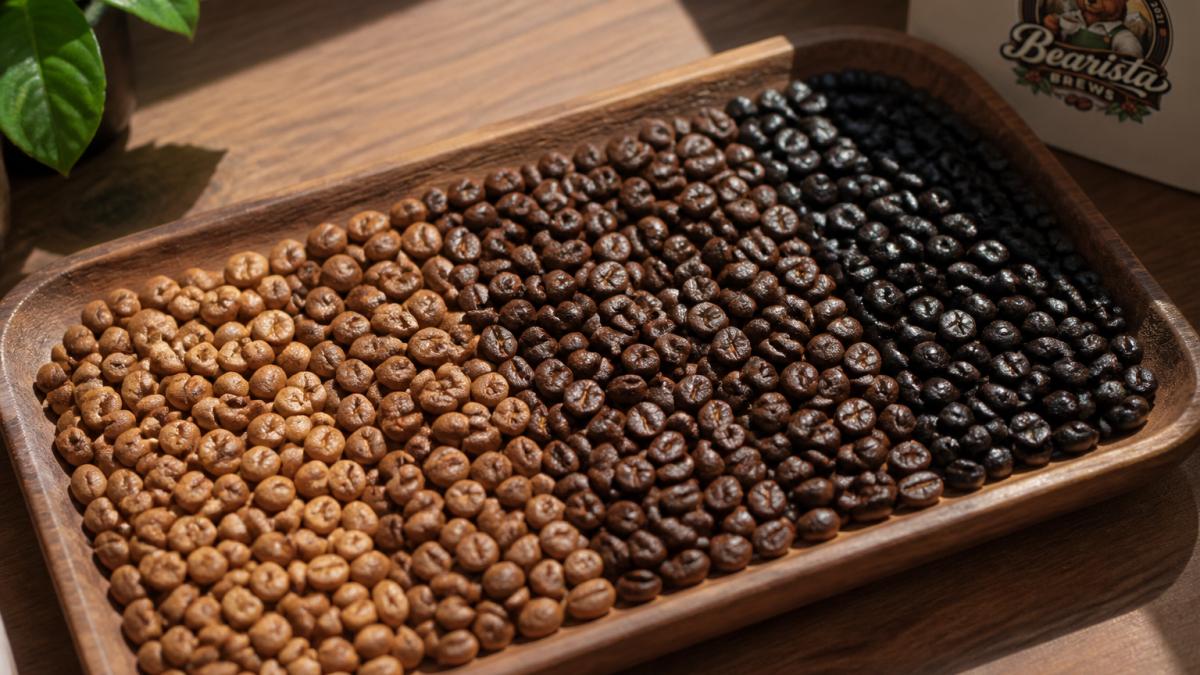
Bean Color: Light Brown to Black
Over-roasted coffee beans display a color that's uniform and nearly black, unlike a natural dark roast, which keeps some brown tones at its darkest.
A true dark roast, like our Italian Roast blend, keeps deep chocolate and cedar notes visible in the bean's appearance.

Light roasts are light brown, medium roasts medium brown, dark roasts dark brown with red undertones. Over-roasted beans are nearly black with no variation.
Surface Oil and Shine
Over-roasted beans develop excessive surface oil that looks greasy or wet: heat stress pushes the bean's natural oils to the surface, where they oxidize. A properly dark-roasted bean has some surface shine; an over-roasted bean looks slick.
Excessive oil also causes clumping: if your whole beans stick together in clusters, the roast pushed too hard. Properly roasted beans roll freely.
Over-Roasted vs. Dark-Roasted Coffee: What's the Difference?
This distinction is crucial because over-roasted coffee beans and dark roasts are often confused, but they're completely different things.
Here's the practical difference: A quality dark roast tastes bold and smooth. An over-roasted bean tastes bitter, flat, and burnt, like drinking burnt toast instead of coffee.
At Bearista Brews, our Flame-Tuned roasting process uses small-batch precision to hit the dark roast sweet spot every time.
Aroma and Smell: Reading What Your Beans Tell You
Your nose is one of your most reliable tools for identifying over-roasted coffee beans. Fresh, well-roasted coffee smells rich and inviting; over-roasted coffee smells acrid, ashy, or like burnt wood, harsh or chemical rather than welcoming.
Grind a small amount and smell the grounds. Quality dark roasts smell smoky but pleasant; over-roasted grounds smell like burnt paper or charcoal. Stale coffee smells dull; over-roasted coffee smells actively unpleasant.
Why Does Coffee Taste Burnt?
Burnt coffee taste comes from over-roasting, but not always. Brewed coffee can taste burnt for several reasons, and identifying which one matters because the fix is different.
If the beans themselves are over-roasted, the burnt taste is baked in. No brewing adjustment will fix it. You need fresh beans.
But burnt taste can also come from brewing errors:
- Water too hot (over 205°F burns the grounds)
- Brew time too long (over-extraction pulls bitter compounds)
- Grind too fine (increases contact time and bitterness)
This is why the at-home inspection checklist matters. You need to isolate the problem. Is it the beans or your brewing?
A Controlled Brew Test to Isolate the Cause
The fastest way to separate bean defects from brewing errors is a side-by-side comparison using the same method, water, and grind setting, changing only one variable at a time.
- Pick one brewing method you know well. Stick with your usual drip machine or pour-over; consistency matters more than which method you choose.
- Lock your controls. Use filtered water at 195-205°F, a medium grind, and the standard brew time for your method. Taste the result black.
- Brew a second cup with beans you trust. Use a bag you know is fresh and properly roasted, and compare side by side.
- Change one variable. If the suspect beans taste burnt but the trusted beans taste normal under identical conditions, the beans are the problem. If both taste burnt, your brewing method is the likely culprit.
Over-roasted beans taste burnt and ashy even when the brew is under-extracted, while brewing errors produce bitterness only when you push extraction too far. If the burnt note appears in every cup regardless of grind or brew time, suspect the beans.
What the Burnt Note Tells You
Burnt, ashy, or charcoal flavors that persist across brew methods point to over-roasting or another roast defect. Bitter, drying flavors that appear only with fine grinds or long brew times point to over-extraction; sour, thin, or vegetal flavors point to under-extraction or underdeveloped beans. Matching flavor to cause keeps you from blaming the roast for a brewing mistake, or your brewer for bad beans.
Signs of a Bad Coffee Roast Beyond Darkness
Over-roasting isn't the only roast defect. Several other problems can ruin a batch of coffee beans.
Uneven Roast Color and Defects
Uneven roast color means some beans are dark while others are light, signaling poor roast control, the roaster didn't stir properly or monitor heat distribution. Uneven roasts taste inconsistent: some grounds bitter and over-extracted, others sour and under-extracted. Look for beans that vary significantly in color within the same bag; properly roasted coffee shows consistent color throughout.
Other roast defects include:
- Tipping: Dark spots on the bean surface while the rest stays lighter. This means heat distribution was uneven.
- Scorching: Random burnt patches on otherwise lighter beans. Equipment failure or careless roasting.
- Quakers: Pale beans mixed in with dark ones. These are underdeveloped beans that weren't fully roasted.
Stale vs. Over-Roasted: How to Tell the Difference
Stale coffee and over-roasted coffee both taste bad, but they're different problems with different solutions.
Over-roasted beans taste burnt and bitter immediately. The flavor is baked into the bean. Freshness won't fix it.
Stale beans taste flat and dull. The flavor compounds have oxidized over time. The taste is muted, not actively unpleasant, and the aroma fades quickly.
The timeline helps too. Over-roasted beans taste bad from day one.
How to Store Coffee Beans for Freshness
Use containers with one-way valves that let CO2 escape but prevent oxygen from entering.
Store in a cool, dark place at room temperature. Refrigerators and freezers introduce moisture when opened, accelerating staleness, so avoid the freezer unless storing beans for months.
Buy smaller quantities more often instead of stockpiling; beans are freshest within two to three weeks of roasting, then start to decline.
Staleness vs. Over-Roasting: A Storage-Aware Diagnosis
Stale coffee and over-roasted coffee both taste bad, but they're different problems with different solutions.
Over-roasted beans taste burnt and bitter immediately. The flavor is baked into the bean. Freshness won't fix it.
Stale beans taste flat and dull. The flavor compounds have oxidized over time. The taste is muted, not actively unpleasant.
The timeline helps too. Over-roasted beans taste bad from day one.
What to Do With Beans That Seem Over-Roasted
If your inspection and brew test point to over-roasting, you have a few realistic options before you throw the bag away.
- Adjust the brew first. Try a coarser grind, a shorter brew time, or slightly cooler water. If the burnt note softens, you may be dealing with a dark roast that is simply more intense than you expected.
- Change the preparation. Over-roasted beans often taste less harsh in a milk-based drink or cold brew, where sweetness and dilution mask some of the char. This is a workaround, not a fix.
- Contact the seller with useful observations. Tell them the roast date, how the beans looked and smelled, and what your controlled brew test showed. Specific observations get a better response than "it tastes burnt."
Your At-Home Inspection Checklist
Use this checklist to evaluate whether your coffee beans are over-roasted:
- Color test: Beans are uniformly dark brown to nearly black (not varied in color)
- Oil test: Beans feel slick with surface oil; finger leaves visible residue
- Smell test: Aroma is acrid, ashy, or harsh; not pleasant or inviting
If more than three of these indicate over-roasting, the batch is compromised.
Brewing and Tasting Controls to Confirm Over-Roasting
Before you blame the beans, run a brewing test to isolate the problem. Use a brewing method you know well, if you typically use drip, stick with drip. Follow these controls:
- Use filtered water at 195-205°F
- Use a medium grind (not fine, not coarse)
- Brew for the standard time for your method
If the coffee tastes burnt, bitter, or ashy, the beans are likely over-roasted. If it tastes normal, your brewing method might be the culprit. Repeat the test with beans you know are good quality and compare side by side.
Identifying over-roasted coffee beans comes down to using your senses: look at the color, feel the oil, smell the aroma, and taste the result. At Bearista Brews, our Flame-Tuned roasting method eliminates the bitter char that signals over-roasting, delivering bold, complex flavor in every bag. Find Your Perfect Roast and taste the difference fresh, properly roasted beans make.

Frequently Asked Questions
How can you tell if coffee beans are over-roasted?
Over-roasted coffee beans show three clear signs: nearly black or charred color throughout, heavy surface oil that makes beans stick together, and a burnt or ashy smell rather than pleasant roasted aroma. When brewed, over-roasted coffee tastes bitter, acrid, or like burnt toast. Dark roasts are intentionally dark but maintain complexity; over-roasted beans lose nuance entirely. Crack a bean open, the interior should be dark but not uniformly charred. If the inside looks uniformly black with no color variation, roasting went too far.
What do over-roasted coffee beans smell like?
Over-roasted beans emit a harsh, acrid smell, similar to burnt toast, charred wood, or even rubber. The aroma lacks the pleasant sweetness or cocoa notes found in properly roasted coffee. A properly dark-roasted bean smells bold and smoky but retains complexity. If your beans smell more like something burned than something brewed, they've been roasted past their peak. Fresh-roasted specialty beans, like those from Bearista Brews roasted to order, preserve aromatic compounds that over-roasting destroys entirely.
Can dark-roasted coffee beans be over-roasted?
Yes, roast level and roasting quality are different. A dark roast like a French Roast or Italian Roast is intentionally dark but crafted with precision to preserve flavor complexity. Over-roasting happens when beans stay on the heat too long, burning away flavor compounds and leaving only bitterness and char. The difference is in the result: a quality dark roast tastes bold and smooth; over-roasted beans taste acrid and one-dimensional. Specialty roasters using controlled methods, like Bearista Brews' Flame-Tuned process, push beans to darkness while preserving taste. Mass-produced dark roasts often cross into over-roasting to hide inconsistency.
How do I know if my coffee tastes burnt because of over-roasting or brewing error?
Brew the same beans two ways: one using your normal method, one using cooler water (around 180°F instead of 200°F) and shorter contact time. If the cooler, shorter brew tastes better, your brewing method is extracting too much and needs adjustment. If both taste burnt and acrid, the beans themselves are over-roasted. Also check freshness: beans older than 3-4 weeks can taste stale or flat, not burnt. Over-roasted beans taste burnt regardless of brewing method. Freshness matters, Bearista Brews ships roasted beans within 2-3 days to preserve the intended flavor profile before any degradation occurs.
