

How to Avoid Bitter Tasting Coffee: A Complete Guide
Table of Contents
- Why Coffee Tastes Bitter (And What You Can Control)
- Start With Fresh Beans: How Long Coffee Beans Stay Fresh
- Coffee Grind Size for Less Bitterness
- Coffee Brewing Temperature: The 195-205°F Window
- The Right Coffee-to-Water Ratio for a Smoother Cup
- How to Avoid Bitter Tasting Coffee With Better Storage
- Choosing Beans That Are Naturally Less Bitter
- Frequently Asked Questions
Last Updated: October 14, 2026
Why Coffee Tastes Bitter (And What You Can Control)
If your morning cup tastes harsh or ashy, the fix is rarely the coffee itself. Bitterness usually comes from over-extraction: too much heat, too fine a grind, or too long a brew pulling out compounds the bean never meant to give up. Learning how to avoid bitter tasting coffee comes down to controlling four things: freshness, grind, temperature, and ratio.
Most guides blame your beans and stop there. That's lazy. The real culprit is usually technique, and technique is something you control.
At Bearista Brews, we roast every order to order, which means the beans arrive at peak flavor rather than sitting on a shelf. That head start matters. But even great beans turn bitter in the wrong hands.
Here's what matters most:
- Over-extraction pulls out harsh, bitter compounds
- Stale beans taste flat and cardboard-like, not bitter, so don't confuse the two
- Water that's too hot scorches the grounds
- Too fine a grind slows the water and over-brews the coffee
Below, we'll walk through each fix in order, starting with the beans themselves.
Start With Fresh Beans: How Long Coffee Beans Stay Fresh
Whole beans stay at their best for about two to four weeks after the roast date. After that, they don't turn bitter so much as go flat, losing the oils and aromatics that give coffee its sweetness.
That's why the roast date matters more than the "best by" date. A bag roasted three weeks ago will always beat one roasted three months ago.
A common mistake is buying in bulk to save money. You save a little and lose the flavor you paid for. Buy smaller bags and buy them more often.
Store beans in an airtight container away from light, heat, and moisture. A cupboard beats a countertop, and a countertop beats the fridge.
Coffee Grind Size for Less Bitterness
Grind size is the single biggest lever most people ignore. When coffee tastes bitter, the grind is usually too fine for the brew method.
Fine grounds expose more surface area to water. More surface area means faster extraction, and faster extraction tips into bitterness. Coarse grounds slow everything down.
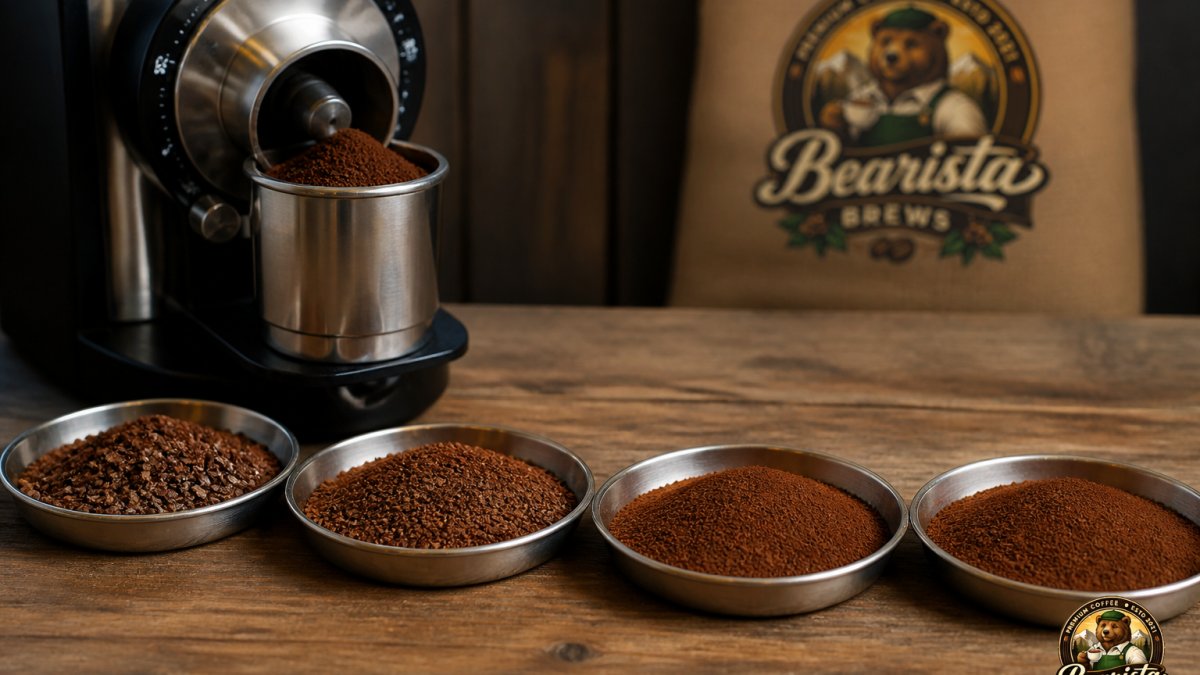
Match your grind to your brewer:
- French press: coarse, like sea salt
- Drip: medium, like table salt
- Espresso: fine, like powdered sugar
- Cold brew: extra coarse, like peppercorns
If your cup tastes bitter, go one step coarser before you change anything else. It's the fastest fix.
Coffee Brewing Temperature: The 195-205°F Window
Coffee brewing temperature should sit between 195°F and 205°F. Water above that range scalds the grounds and pulls out harsh, bitter notes no bean can survive.
Most people pour straight off a rolling boil. That's around 212°F, and it's too hot. Let the kettle rest for 30 to 60 seconds after it boils, then pour.
For cold brew, temperature works differently. You steep in cold or room-temperature water for 12 to 24 hours, so there's no heat to scorch anything. That's why cold brew tastes smoother and less acidic than hot coffee made from the same beans.
If you're not sure your water is in range, a simple thermometer takes the guesswork out. It's a small tool that saves a lot of bad cups.
The Right Coffee-to-Water Ratio for a Smoother Cup
The right coffee-to-water ratio is roughly 1 to 2 tablespoons of ground coffee per 6 ounces of water. Too little coffee and you get a weak, sour cup. Too much and you get an over-extracted, bitter one.
Weighing your coffee beats scooping it. A kitchen scale costs little and removes the guesswork. Grams are more consistent than tablespoons, where a heaped scoop can double the dose.
Start here and adjust:
| Problem | Likely Cause | Fix |
|---|---|---|
| Bitter, harsh | Too fine a grind | Grind coarser |
| Bitter, dry finish | Water too hot | Let kettle rest 30-60 seconds |
| Bitter and weak | Too much coffee | Reduce dose slightly |
| Sour, thin | Too little coffee | Add more grounds |
| Flat, lifeless | Stale beans | Buy fresher, smaller bags |
Change one variable at a time. If you change three things at once, you'll never know which one fixed it.
How to Avoid Bitter Tasting Coffee With Better Storage
Good storage keeps bitterness out of the cup by protecting the oils that make coffee taste sweet. Air, light, heat, and moisture all break those oils down.
Keep it simple:
- Use an airtight, opaque container
- Store it in a cool, dark cupboard
- Buy only what you'll drink in two to four weeks
- Skip the fridge and freezer for daily-use beans
The freezer works for long-term storage, but only if you seal the beans tight and thaw them fully before brewing. Otherwise, condensation wrecks them.
A common mistake is keeping beans in the bag they came in. Most bags have a one-way valve but reseal poorly. Transfer to a proper container the day you open the bag.
Choosing Beans That Are Naturally Less Bitter
Some beans are simply less bitter than others, and roast level is the biggest factor. Lighter roasts taste brighter and sweeter. Darker roasts taste bolder and smokier, and cheap dark roasts hide behind char.
The trick is a dark roast done well. Our French Roast is a good example: it delivers dark chocolate, charred oak, and brown sugar without the bitter char that mass production burns into the bean. That's the difference between bold and bitter.

If you want brightness, our Blonde blend leans sweet and light, with the delicate fruit and floral notes that standard light roasts lose. For a smooth, everyday cup, the House Blend brings nutty, sweet chocolate and a clean finish.
Here's how to pick:
- Want less bitterness overall: go lighter or medium
- Want bold flavor without char: choose a well-roasted dark
- Want consistency: pick a blend, not a single origin
- Want a cold cup: use beans built for cold extraction
Freshness ties it all together. Beans roasted to order and shipped within two to three days arrive with their oils intact, which means more sweetness and less bitterness in the cup.
Bitterness is a technique problem more often than a bean problem, and that's good news. You can fix grind, temperature, and ratio today without buying anything new.
When you're ready to upgrade the beans themselves, Bearista Brews roasts every order to order and ships within two to three days, so you start from peak freshness. Our Flame-Tuned process unlocks deep, complex flavor while eliminating the bitter char common in mass production. Find your perfect roast and taste the difference freshness makes.
Frequently Asked Questions
Why does my coffee taste bitter?
Bitter coffee usually comes from over-extraction, which happens when water pulls too many harsh compounds from the grounds. Common causes include a grind that's too fine, water that's too hot, or steeping for too long. Stale beans also taste bitter because oxidation has already broken down the natural sugars. Fixing just one of these variables often makes a noticeable difference in your cup.
Does a finer grind make coffee taste more bitter?
Yes, a finer grind increases the surface area that water contacts, which speeds up extraction. If you grind too fine for your brew method, the water pulls bitter compounds before you can stop it. For drip and French press, use a medium or coarse grind. For espresso, a fine grind is correct because the brew time is much shorter.
How can I tell if coffee beans are stale?
Stale beans lose their aroma first. If you open a bag and smell cardboard or paper instead of the expected chocolate or fruit notes, the beans are past their peak. Another sign is a flat, bitter taste with no sweetness. Whole beans stay fresh for about two to four weeks after the roast date, while pre-ground coffee declines much faster.
What is the best coffee-to-water ratio for a smoother cup?
A good starting point is 1 to 2 tablespoons of ground coffee per 6 ounces of water. If your coffee tastes bitter, try slightly increasing the water or reducing the coffee. Small adjustments of a few grams make a real difference. Weighing your coffee with a scale gives you more control than using scoops.